Article
Are We Designing Spaces or Just Styling Them for Instagram?
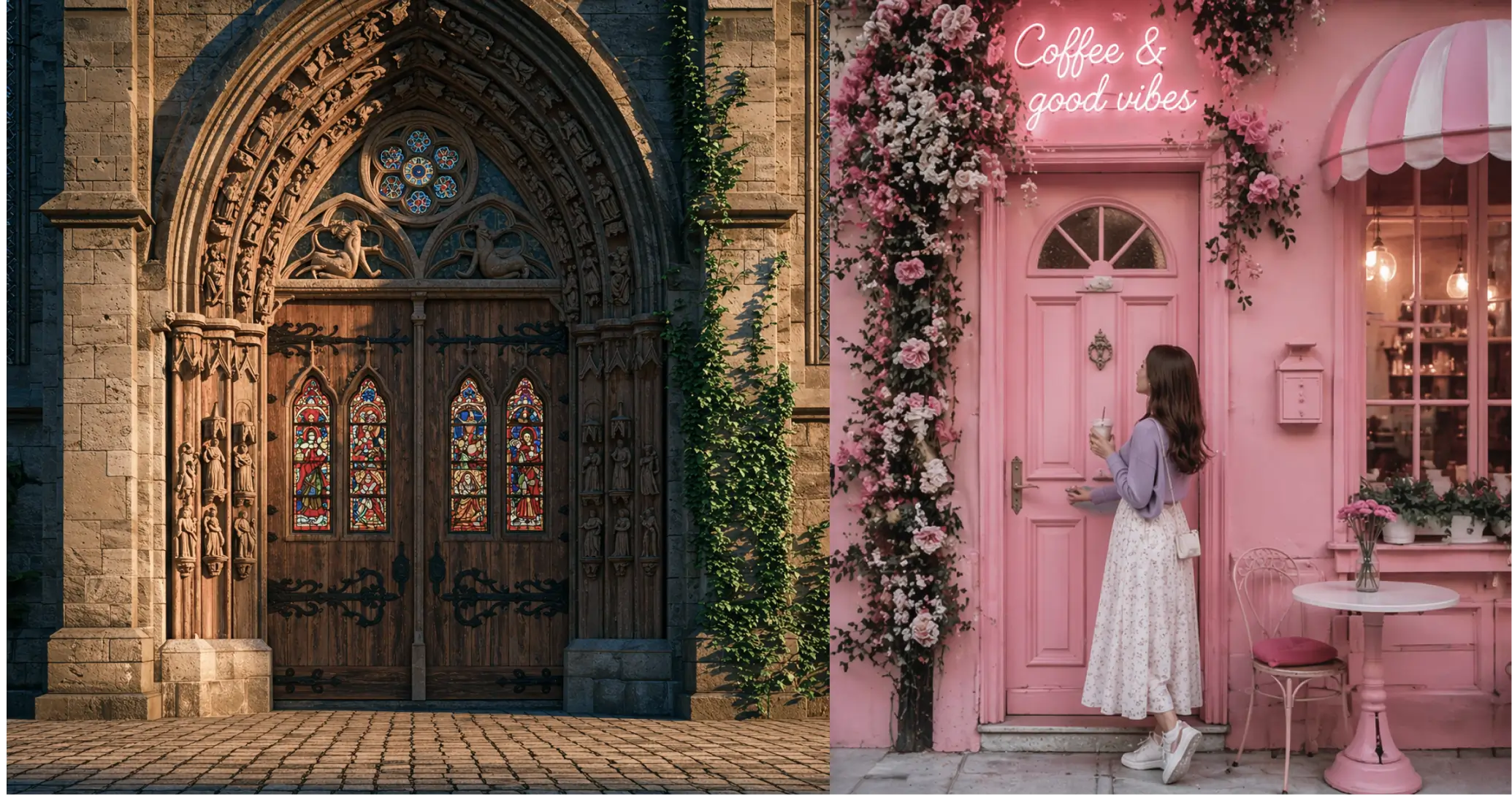
The paradoxical doors of spaces.
I remember being a third-year architecture student on my first trip to Europe. I was completely fascinated by doors. Not just any doors, but the ones in old castles and heritage structures. Heavy, carved, layered with time. Each one felt like it held stories within it. I clicked photographs of almost every door I saw, and even posed in front of a few, drawn to their scale, their texture, their quiet presence.
Back then, I wasn’t trying to capture a moment for anyone else. I was simply responding to what I felt. Today, I find myself in restaurants and cafés, once again standing in front of doors. But these are different.
Some are real. Some are curated backdrops. Some are doors that lead nowhere, designed purely as photo points. And almost instinctively, we pose. It makes me pause sometimes. How far have we come since social media became the center of how we experience spaces? We now live within carefully curated feeds and algorithms whose very essence is make-believe. Everything can be constructed to fit within a frame, and once it does, we accept it as reality. A corner becomes a destination, a backdrop becomes an experience, and a photograph becomes proof of life.
When did, how it feels to live here become secondary to how it looks on camera?
As a designer, this shift feels particularly complex. A designer does not think in frames. A true designer understands how an entire space comes together. The textures, the light, the climate, the wind flow, the placement of furniture, forms and proportions, and the tactile nature of finishes. Design is not a moment. It is a continuous, lived condition. And yet, increasingly, spaces are being reduced to moments that can be captured instantly.
This trend weighs especially heavy on hospitality and commercial spaces. Their primary intention is to sell, and today, selling is deeply tied to visibility. Visibility comes from social media, when done right. A space that photographs well is a space that travels. It gets shared, saved, reposted, and eventually visited. And so, design begins to cater to the camera.
Instagrammable corners. Statement backdrops. Doors that lead nowhere but look like they should. In the context of visibility, it makes sense. But when this logic begins to influence how we think about all spaces, including our homes, the line starts to blur. Homes, at least for now, still resist this fully. People tend to be more thoughtful, more personal, and more forgiving of imperfection. They design for comfort, for routine, for real life.
But even here, the influence is creeping in. The pressure to have a beautiful home, the desire for spaces that look curated, the subtle urge to make every corner presentable. And slowly, without realizing it, we begin to design not just for ourselves, but for how our lives might be perceived.
The rise of social media has undeniably democratized design. It has made inspiration more accessible, exposed people to new ideas, and allowed designers to share their work widely. But it has also introduced a new layer of pressure, one that prioritizes immediacy, visual impact, and shareability. Design decisions are increasingly influenced by what photographs well.
A chair is placed not where it is most comfortable, but where the light hits best at 4 pm. A corner is styled not for use, but for a reel. Materials, colors, and layouts are chosen not just for how they age, but for how they appear in a single frame. Spaces begin to perform. They are no longer just lived in. They are presented.
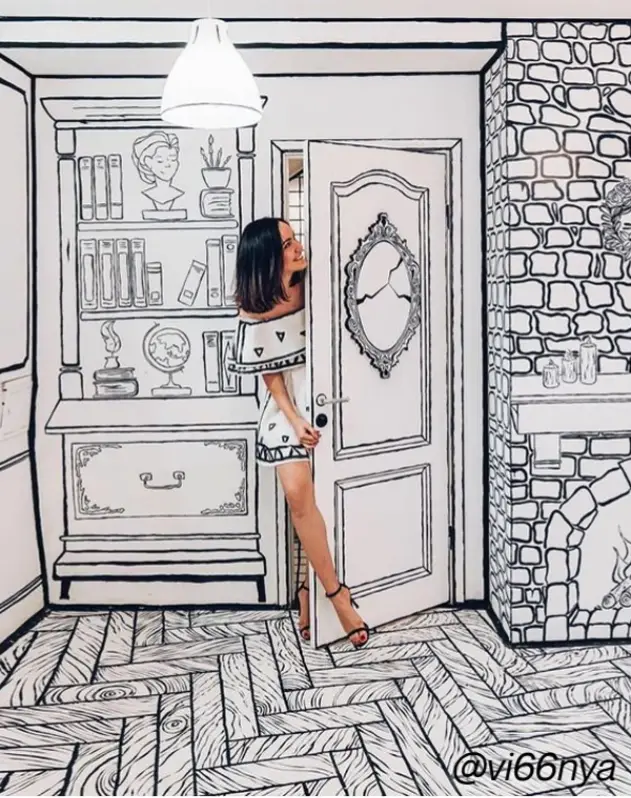
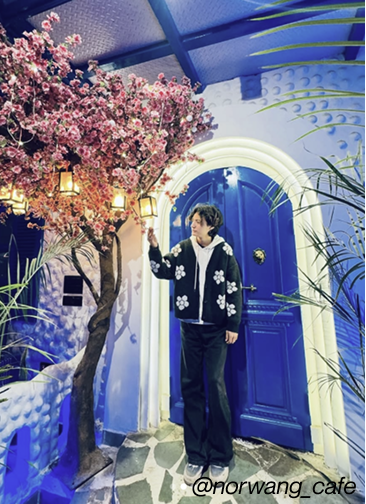
This is not to say that aesthetics are unimportant. Visual appeal has always been a fundamental part of design. But when aesthetics begin to override function, something essential is lost. Because a home is not a static image.
It is dynamic, imperfect, and deeply personal. It holds routines, conversations, pauses, and chaos. It is meant to be used, not just viewed. And good design, at its core, is not about how a space looks in isolation, but how it feels over time.
There is also an interesting paradox here. As designers and creators, we are part of this ecosystem. We document, we share, we curate. We understand the value of a well-framed shot and the reach that comes with it. But we also see what does not make it to the frame. The discomfort of a beautiful chair that no one actually sits on. The impracticality of layouts designed for symmetry rather than movement. The quiet compromises made to maintain a certain aesthetic. And so, we find ourselves constantly navigating this tension between creating spaces that are experienced and spaces that are consumed.
Perhaps the issue is not with platforms or visibility, but with what we begin to optimize for. If design starts to prioritize how quickly it can capture attention, rather than how deeply it can support life, we risk reducing spaces to content. And in doing so, we may be overlooking the very purpose of design itself. And maybe the question we need to ask is not whether a space is beautiful enough to share, but whether it is comfortable enough to live in.
Because ultimately, a home is not a photograph. It is a lived experience.
But maybe this is not entirely a loss. Maybe it is simply a shift, one that is still finding its balance. While platforms may influence how spaces are presented, they have also opened conversations around design that were once limited to a few. More people are engaging with their environments, questioning what they like, and becoming aware of how spaces shape their lives. And that, in itself, holds value.
So perhaps the question is not whether social media is changing design. It clearly is.
The real questions are:
Can we engage with it more consciously?
Can we design spaces that photograph beautifully, but also live effortlessly?
Can we create homes that are expressive, yet deeply personal?
Can we resist the urge to perform, and instead choose to inhabit?
Because maybe the future of design does not lie in rejecting visibility, but in redefining what we choose to show.
Not just the perfect corners, But the lived-in ones.
Not just the stillness, But the movement.
Not just the aesthetic, But the experience.
And perhaps, if we get that balance right, a space will not just look good in a frame. It will feel right, long after the camera is put away.
Read More
People & Culture
Building today for the womenhood of tomorrow
Architecture
‘Undefining’ Architecture…
- © 2024 SSA. All Rights Reserved.
- Terms of Use